Importing e-commerce parcels to the USA is a distinctly different process that are unfamiliar to most traditional logistics experts.
Read More

Importing e-commerce parcels to the USA is a distinctly different process that are unfamiliar to most traditional logistics experts.
Canada and Singapore enjoy a historic connection. Canada was one of the first countries to establish diplomatic ties with Singapore and remains an important trading partner. Companies rely on reliable methods shipping to Canada from Singapore.
Quick Summary: Shipping from the USA to Canada requires a strategic approach to customs. By leveraging the USMCA (CUSMA) agreement, becoming a Non-Resident Importer (NRI), and optimizing reverse logistics, US brands can sell to Canadians as easily as they sell to customers in California.
Jump to Section:
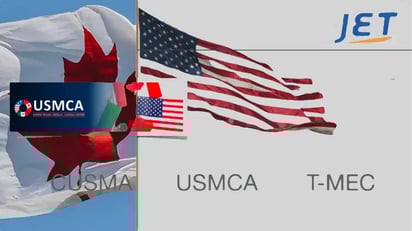
The USMCA (known as CUSMA in Canada) modernized cross-border trade. However, the benefits depend entirely on the shipping mode. The higher duty-free thresholds apply specifically to Courier / Express shipments, not standard mail. The duty free threshold for non-courier shipments to Canada is $20.
| Value (CAD) | Customs Duty | Sales Tax (GST/HST) | Condition |
|---|---|---|---|
| Under $40 | FREE | FREE | No tax or duty collected. |
| $40 to $150 | FREE | Applicable | Duty-free, but GST/HST applies on value over $40. |
| Over $150 | Applicable* | Applicable | *Duty is 0% if goods are "US Origin" (Certified). |
For shipments valued under CA$3,300, you do not need a formal certificate. A simple statement on your Commercial Invoice is sufficient:
"I hereby certify that the goods covered by this shipment qualify as originating for the purposes of preferential tariff treatment under USMCA/CUSMA."
Below is a format to copy and paste directly onto your commercial invoice or separate sheet.
There is no official "form." However, you must provide the following 9 Minimum Data Elements:
1. Certifier Type: (Importer, Exporter, or Producer)
2. Certifier Name & Details: (Name, Title, Address, Phone, Email)
3. Exporter Name & Details: (If different from certifier)
4. Producer Name & Details: (Can state "Available upon request")
5. Importer Name & Details
6. Description of Goods & HS Code: (6-digit level)
7. Origin Criteria: (e.g., A, B, C, or D)
8. Blanket Period: (If applicable, max 12 months)
9. Signature & Date:
"I certify that the goods described in this document qualify as originating and the information contained herein is true and accurate. I assume responsibility for proving such representations and agree to maintain and present upon request or to make available during a verification visit, documentation necessary to support this certification."
Many US brands struggle with high cart abandonment rates because Canadian buyers fear surprise fees at delivery. The solution is the Non-Resident Importer (NRI) program.
An NRI is a US-based company that registers with the Canada Border Services Agency (CBSA) to act as the "Importer of Record."
Note: Becoming an NRI requires registering for a Canadian Business Number, collecting GST/HST, and registering for CARM (CBSA Assessment and Revenue Management).


Getting goods into Canada is half the battle. Getting them back is often harder. Canadian consumers expect easy returns, and US sellers need a cost-effective way to retrieve inventory.
Most US carriers charge full international rates for individual return labels. Furthermore, Amazon FBA Canada will not ship removal orders back to a US address.
Jet Worldwide provides a Canadian return address (in Montreal or Toronto) for your customers or Amazon FBA removals.
Read more about Reverse Logistics from Canada
Balancing speed against the "Entry Preparation Fee" (brokerage fee) is critical for US exporters.
| Carrier | Best For | Pros | Cons |
|---|---|---|---|
| USPS (Mail) | Personal / Light parcels | Low cost, often avoids random customs checks. | Poor tracking, slower transit, no DDP option. |
| FedEx / UPS Ground | Regional Shipping | Reliable tracking. | Brokerage Entry Preparation Fees charged to receiver unless you ship via "Brokerage Inclusive" service. |
| Jet Worldwide | parcels to pallets | DDP Services, NRI support, and Reverse Logistics. | Best for commercial volumes rather than personal shipments |
Yes. If you are importing commercial goods into Canada (acting as the NRI), you must register in the CARM Client Portal to pay duties and taxes.
Yes. If the goods are "US Goods Returned," they can re-enter the USA duty-free. However, you must provide proof that the goods were originally exported from the US (using form 3311 or similar evidence).
Duties are tariffs based on the commodity (HS Code) and origin. Taxes (GST/HST) are consumption taxes based on the destination province. Even if an item is duty-free under USMCA, it is rarely tax-free.
From NRI registration to managing Amazon Canada returns, Jet Worldwide acts as your trusted partner north of the border.
Get a Canadian Logistics QuoteTo help answer the many inquiries we get on shipping to the United States from Canada, here is our updated 2026 guide to US customs, USMCA / CUSMA free trade, and how to choose the right carrier.
The traditional role of logistics for retailers was simply to get large bulk orders sent from the manufacturer using the lowest cost possible. American retailers are essentially middlemen between Asian suppliers and US consumers. Their power is in their sheer scale and being able to buy in bulk and sell individually.
Ecuador is an increasingly popular destination and residence to thousands of Canadians. Jet Worldwide provides low cost delivery for parcels shipped from Guayaquil, Quito and Cuenca to Canada.
Quick answer: The cheapest way to ship from Canada to Japan is Canada Post surface for small personal parcels; couriers deliver in 2 to 4 days for business shipments. Canadian-origin goods clear duty-free under CPTPP with an origin statement on the invoice, at any value, though Japanese consumption tax of about 10 percent still applies.
Reading time
Jet Worldwide offers low-cost parcel solutions to Japan with the option for duty-free clearance under CPTPP.
Send us your shipment details to request a quote:
Choose the option that fits your budget and timeline:
Pricing varies with weight, dimensions, fuel surcharges, and the final destination in Japan (Tokyo or Osaka versus rural areas).
| Service | Weight guide | Estimated cost (CAD) | Estimated time |
|---|---|---|---|
| Canada Post surface | Up to 2 kg | about 45 | 4 to 8 weeks |
| Canada Post air | Up to 2 kg | about 98 | about 2 weeks |
| Courier or Jet economy | 5 kg | about 190 to 200 | 3 to 5 days |
| Courier or Jet economy | 10 kg | about 260 to 280 | 3 to 5 days |
Rates are estimates for illustration only. Final price depends on dimensions, fuel, and carrier surcharges.
The Comprehensive and Progressive Agreement for Trans-Pacific Partnership (CPTPP) gives Canadian-origin goods preferential duty rates, often 0 percent, entering Japan. CPTPP has been in force between Canada and Japan since 30 December 2018.
For CPTPP you do not need a formal certificate. You need a certification of origin statement on your commercial invoice (or any other document), completed by the importer, exporter, or producer, with the minimum data set out in Annex 3-B of the agreement.
Correction noted: an earlier version said the invoice origin statement was only sufficient "for shipments under $1,000 USD." That is incorrect. CPTPP self-certification applies at any value with no lower threshold. Separately, Japan Customs may waive the requirement to present an origin document when the total customs value is 200,000 yen or less, but the goods must still qualify as originating.
CPTPP removes the duty, but Japanese consumption tax still applies (see customs section below).
Do you live in Japan but want to shop from Canadian retailers? Jet Worldwide offers a parcel-forwarding service for Canada.
We provide a Canadian address where you receive goods, then consolidate and forward them to Japan. Because the goods ship from Canada, qualifying Canadian-origin items may be eligible for CPTPP duty-free status.
Dry ice provides a solution for shipping goods that must remain cold or frozen during transit. Per-package quantity limits apply and vary by carrier and aircraft. Contact our team for details.
LCL (Less than Container Load): best for shipments too big for air courier, over about 150 kg, that do not fill a container. You share space with other shippers, so allow extra time for consolidation.
FCL (Full Container Load): the fastest ocean option. You rent the entire 20 ft or 40 ft container. Best for steady volume or large bulk orders.
Useful read: ocean shipping to and from Canada, what to know.
Japan Customs is efficient but strict. To avoid delays, prepare the following:
Japanese consumption tax is 10 percent standard, with an 8 percent reduced rate on food and non-alcoholic beverages. It is charged on the CIF value plus any customs duty, so it applies even when CPTPP makes the duty zero.
DAP (Delivered at Place): the receiver pays duties and taxes. This is the default for most couriers.
DDP (Delivered Duty Paid): the sender pays all duties and taxes. This gives a better customer experience but requires the sender to account for Japanese consumption tax.
Information gain, from Jet Worldwide lane data: across the Canada-to-Japan parcels Jet handled in the last 12 months, about [JET-PROPRIETARY-PERCENT]% of CPTPP-eligible shipments that were billed duty at clearance had a valid origin statement missing from the invoice rather than any genuine origin problem. (Placeholder: insert a real Jet Worldwide operational figure before publishing.)
For individuals shipping items under 2 kg, Canada Post surface, the Small Packet service, is the cheapest option, though it takes several weeks. For commercial shipments, economy air courier via a reseller often provides the best balance of price and speed.
Express courier takes about 2 to 4 business days. Economy air takes about 5 to 9 business days. Ocean freight takes about 4 to 8 weeks.
Yes, if the goods are of Canadian origin under the CPTPP rules of origin. Include a certification of origin statement on the commercial invoice, with the Annex 3-B minimum data. There is no minimum value to self-certify. Duty is 0 percent, but Japanese consumption tax may still apply.
No. CPTPP self-certification can be used at any shipment value; there is no lower threshold. Separately, Japan Customs may waive the requirement to present an origin document when the total customs value is 200,000 yen or less, but the goods must still qualify as originating.
Japanese consumption tax is 10 percent standard, with an 8 percent reduced rate on food and non-alcoholic beverages. It is charged on the CIF value plus any customs duty, so it applies even when CPTPP makes the duty zero.
Yes, but strict rules apply on alcohol content and labeling. Canadian ice wine is a popular export and can qualify for CPTPP benefits. Contact our team for commercial wine shipping requirements.
Jet Worldwide provides personalized support to ensure your shipments are classified correctly, delivered on time, and fully compliant.
Disclaimer: Jet Worldwide content is for general information only. Verify current regulations with your customs broker and the relevant authorities before shipping.
Shipping parcels from the USA to Canada is dominated by FedEx and UPS. Their USA networks are unrivalled and their ground service offers the lowest cost for large parcels. But when shipping times and clearance costs are considered, ground shipping from the USA to Canada is not always as low as it may seem. Read about the New NAFTA/USMCA/ CUSMA/T-MEC EFFECTIVE JULY 2020 easier duty free access to Canada from the US.
Montreal e-commerce online sellers are seeking solutions for selling internationally beyond the USA and shipping directly to France, the European Union, Japan, China and across the globe