
To help answer the many inquiries we get on shipping to the United States from Canada, here is our updated 2026 guide to US customs, USMCA / CUSMA free trade, and how to choose the right carrier.
Benefit from best-in-class logistics support between Canada and North America. Whether you are an e-commerce seller or an industrial manufacturer, choosing between postal, courier, or trucking is the first step to optimizing your costs.
Read about New Section Tariffs: Sept 2026 Update
Quick Answer: How Do You Ship Parcels from Canada to the USA?
To ship a parcel from Canada to the USA, choose a mode that fits your weight and urgency (Canada Post for light low-value parcels, express courier for speed, trucking for pallets), prepare a commercial invoice with a clear product description, value, and country of origin, and define who pays duty using Incoterms. All shipments from Canada are subject to customs entry and duty. Most Canadian-made goods that qualify under USMCA can still enter duty-free with a certification of origin.
📥 Download the PDF guide: Principles of Importing to the USA
Please feel free to send your shipping details to request a quote to the USA:
- Pickup location: Canadian Postal Code
- Delivery location: USA Zip code
- Commodity,Weight and dimensions
- Cargo ready date
- Preferred mode of transport (Air / ground)
- Required Incoterm
Make sure the company you are shipping is registered - and able to recieve goods - as the Importer of Record.
The Big 3: Courier vs Trucking vs Postal
There is no one-size-fits-all solution. The best option depends on your volume, weight, and urgency.
Postal (Canada Post)
Best for: Individuals and low-volume e-commerce sending light parcels under 2 kg.
Pros: No residential surcharges; usually no brokerage fees for low value.
Express Courier
Best for: Urgent documents, time-sensitive parcels, and high-value goods.
Pros: Detailed tracking, reliable delivery, integrated customs clearance.
Trucking (LTL/FTL)
Best for: Pallets, bulk inventory, and heavy industrial equipment.
Pros: Lowest cost per kg for large shipments; flexible pickup options.
Comparison Table: Shipping Modes to the USA
| Feature | Canada Post (Packet) | Courier (FedEx/UPS Ground) | Courier (Express Air) | Trucking (LTL) |
|---|---|---|---|---|
| Speed | Slow (1 to 3 weeks) | Medium (4 to 7 days) | Fast (1 to 2 days) | Medium (5 to 8 days) |
| Tracking | Limited | Full visibility | Real-time | Milestone only |
| Customs brokerage | Usually included | Entry fee applies | Included | Requires a broker |
| Best weight | Under 2 kg | 2 kg to 68 kg | Under 50 kg | Over 100 kg |
Required Documentation for US Customs
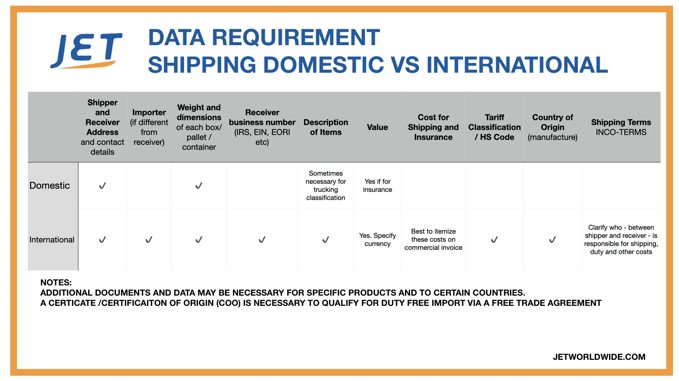
The most common reason for delays is paperwork. Whether you ship by post or courier, accuracy is key.
1. The Commercial Invoice
This is the passport for your goods. It must include:
- Shipper and consignee: Full name, address, and phone numbers.
- Description: A clear description of the items (for example, "cotton t-shirt," not just "clothes").
- Value: The transaction value (the amount paid or payable for the goods) in USD or CAD.
- Country of origin: Where the goods were manufactured, not where they ship from.
2. Other Government Agencies (PGA)
If you ship specific commodities, you need more than customs clearance:
- FDA (Food and Drug Administration): Required for food and snacks. You must file "Prior Notice" and obtain a PN number before shipping.
- FCC: For electronics that emit radio frequencies.
- Fish and Wildlife: For goods made from animal products or mother of pearl.
Duty on Shipments to the USA: USMCA (CUSMA), De Minimis, and 2026 Tariffs
Understanding the current duty rules can save you and your customers significant money.
All imports are subject do duty assessment
All shipments from Canada are now subject to US customs entry and duty, regardless of value. The main duty types to consider:
- Most Favoured Nation (Column 1): The base rate applied according to the HS classification of the goods.
- Section surcharges: A 10 percent surcharge on imports from all countries, effective February 2026. This framework is temporary and changing — verify the current rate before quoting.
- Section 232 (steel and aluminum): Tariffs on goods made from non-US-origin steel and aluminum.
- Section 338: Additional measures - such as section 338 -change often.

USMCA / CUSMA Preference
If your goods are made in Canada or Mexico, they qualify for duty-free import under the USMCA agreement, which shields them from the base MFN duty. You must provide a valid certification of origin.
Importer of Record to the USA
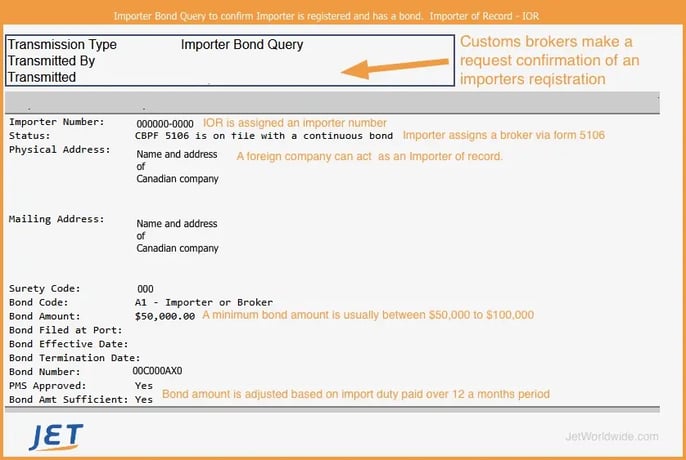
If the value of the goods entering the USA exceeds 2500 USD, there must be a clearly defined Importer of Record (IOR). The IOR usually submits a Power of Attorney (POA) authorizing their customs broker to make entry on their behalf, via Form 5106. Note that the receiver or consignee is not always the Importer of Record.
For example, if the client you sold the goods to asks you to ship directly to their customer, the consignee would not be the IOR.
Update on Inactive Importer of Record (effective July 2026)
Importers have not submitted an entry within a 366 day period will be viewed as inactive. IORs with this “Inactive for Entry Purposes” status are ineligible to transmit entry. * Cargo Systems Messaging Service CSMS # 69241265
Can a Canadian Company Be the Importer of Record to the USA?
Yes. A Canadian company can register as a Foreign Importer of Record with US Customs by assigning a broker (Form 5106) and obtaining a surety bond of at least 50000 USD. This lets the Canadian seller act as importer and deliver duty paid, just like a domestic supplier.

Frequently Asked Questions
Is shipping from Canada to the USA still duty-free under de minimis?
No. The 800 USD Section 321 de minimis exemption is not applicable. Every commercial shipment is subject to duty. Canadian-origin goods that qualify under USMCA can still claim duty-free preference with a valid certification of origin.
Do I need a customs broker to ship from Canada to the USA?
Technically, the US importer can self clear but usually choose to use a customs broker. Couriers include integrated brokerage for their express services. Ground and trucking shipments usually require a broker and a separate entry preparation fee. Shipments valued over 2500 USD require formal entry with a defined Importer of Record.
What documents do I need to ship a parcel from Canada to the USA?
At minimum, a commercial invoice and a waybill. The invoice must show the shipper and consignee, a clear product description, the transaction value, and the country of origin. Some goods also need other government agency clearance, such as FDA Prior Notice for food or FCC for electronics.
Can a Canadian company be the US Importer of Record?
Yes. A Canadian company can register as a Foreign Importer of Record with US Customs, assign a broker using Form 5106, and obtain a customs surety bond of at least 50000 USD. This has recently been subject to new restrictions. Even when clearing goods via a Foreign Importer of Record, customs demands the IRS or EIN number of the consignee.
What is the cheapest way to ship a parcel from Canada to the USA?
For light, low-value parcels under 2 kg, Canada Post usually has the lowest landed cost because it avoids residential surcharges and most brokerage fees. For commercial volume, express courier or trucking is more economical per kilogram — but watch for entry preparation fees on ground services. Contact our team for rates.
What tariffs apply to goods from Canada to the USA in 2026?
Goods may face the Most Favoured Nation (Column 1) rate by HS code, plus additional measures that change frequently: Section 232 steel and aluminum tariffs, and Section 338 measures where applicable. Canadian-origin goods qualifying under USMCA can avoid the base duty with a certification of origin. Always verify current rates before quoting.

Expand your cross-border opportunity with Jet's professionals. We help you choose the right mix of courier, trucking, and postal solutions.


Timothy Byrnes — Jet Worldwide
Timothy has led Jet Worldwide, a Montreal-based international logistics and customs brokerage firm, since 1988, specializing in Canada-US cross-border shipping and trade compliance. More about our team.
Disclaimer: This information is for general guidance only and is subject to change. Tariff rates in particular are changing frequently in 2026. Always confirm current regulations with a customs broker or carrier before shipping.