To help answer the many inquiries we get on shipping from Canada, we defined the key things to consider when shipping to the USA. As Canada's biggest trade partner, it is no surprise that shipping packages to the United States is an important destination.
Jet Worldwide provides North American, Canadian, and global logistics. Our support refers to the various services regarding the international and Canadian movement of goods. This can include things like transportation, rate comparison, storage facilities, supply chain management. Our logistics support augments your team by not being beholden to a specific carrier or process.
GETTING A REFUND FOR IEEPA TARIFFS
Basic Steps for Shipping from Canada to the USA
Shipping from Canada to the United States involves navigating the customs regulations and procedures of both countries. Here are basic steps to follow:
- Determine the value of the goods: The value of the goods you are shipping will determine the applicable customs duties and taxes. Read more about how to assign a value for international shipping.
- Leverage trade agreements: Understand how to benefit from Section 321 rules and the USMCA free trade agreement.
- Determine the HS classification: Although not required for low-value items, it is always best to know the HS classification of your goods. Read more about HS Codes.
- Choose a shipping method: You will need to choose a shipping method, such as air, UPS/FedEx Ground, or truck transportation. Consider factors such as the size, weight, delivery speed, and cost.
- Prepare documentation: Prepare the necessary paperwork including a commercial invoice, certification of origin, and other required documents.
It is important to verify compliance with the consignee/importer and regulatory authorities prior to shipping.
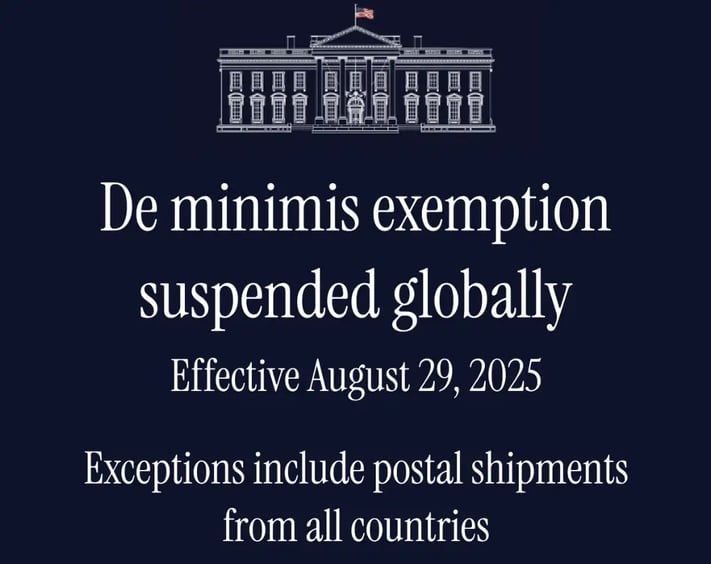
IMPORTANT: 2025 updates to Section 321
Are shipments from Canada duty free to the USA?
All shipments from Canada to the USA are subject to import duty. Most shipments valued under $800 USD can be imported duty free. Goods that qualify as Canadian origin under the USMCA can be imported duty free. Just being shipped from Canada does not, in itself, qualify the import as duty free.
READ MORE: CUSTOMS DUTY EXPLAINED AND HOW IT IS CALCULATED
What does it cost to ship to the USA from Canada?
The cost of shipping to the USA depends on the weight and size of your shipment. Generally speaking, the cheapest option for individuals shipping small packages and personal items is via Canada Post. The cheapest option for larger parcels is via ground shipping. Contact our team for shipping pallets via less than truckload. Get our best market spot quote economy express over 10 kg and commercial shipments.
Shipping goods requiring dry ice Canada to USA
Shipping shipments on dry ice from Canada to the USA supports the movement of temperature-sensitive goods that must remain either frozen or deeply chilled throughout transit. Dry ice maintains temperatures less than −20°C without the sweating associated with ice packs. Jet can provide solutions for both methods, commonly required for biomedical, life-science, and frozen food samples. Contact our team for details.
1. Required documentation for parcels shipped to the USA
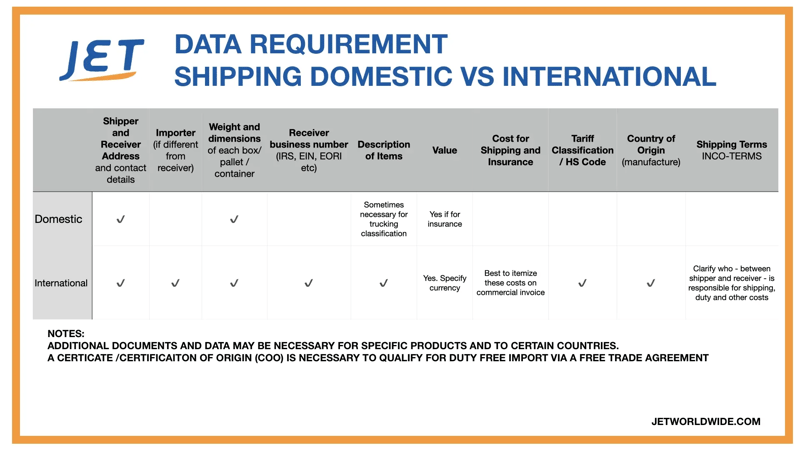
All packages shipped from Canada need to be declared and will go through the US Customs clearance process. All parcel shipments to the USA from another country must be accompanied by an invoice for customs clearance.
Note: When shipping from Canada to the USA via parcel post, a postal customs form (CN22) must be completed.
The basic data points required for an invoice include:
- Date of shipment
- Name, address, telephone number of shipper
- Name, address, telephone number of consignee
- Detailed description of the items being sent
- Value of the items
The key provisions of the USMCA include:
- Duty-free and tax-free entry for most Canada-origin parcels valued under USD 800.
- Simplified Certification of Origin for shipments valued under USD 2,500.
Specific Customs Forms
Form 3325: Required if you wish to send trade show related items, such as displays.
Form 3299: Required for shipping personal effects.
Form 5106: Shipments valued over $2,500 require a registered importer of record to assign a US Customs broker to act on their behalf via this form.
Paperwork for Other Government Agencies
There are over 40 US government departments that have unique requirements necessary for your goods to clear customs. The most common involved include the Department of Transportation (DOT), Federal Communications Commission (FCC), Environmental Protection Agency (EPA), Food and Drug Administration (FDA), as well as Fish and Wildlife.
2. How valuation affects clearance to the USA
A Low Value Shipment (LVS) destined for the US no longer qualifies for duty free import. Contact our team to build an alternative to Section 321.
Most goods between US$800 and US$2,500 qualify for an informal entry but are subject to duty. The value of the import is a key factor in determining the entry type to the USA: Under $800 (section 321), under $2500 (informal entry), over $2500 (formal entry).
3. Carrier options for shipping parcels to the USA from Canada
The cheapest way to ship your packages to the United States will vary based on the size, weight, and address.
| Carrier Option | Best For | Key Considerations |
|---|---|---|
| Canada Post | Individuals shipping small parcels (under 2 kg) | Lowest-cost option, but offers limited tracking and customer support. |
| FedEx / UPS Ground | Heavier parcels that are not highly time-sensitive | Cost-effective delivery within 3-7 days. Entry preparation fees apply. |
| Air Express (DHL, FedEx, UPS) | Urgent deliveries | Includes customs entry preparation but comes at a premium cost. |
| Jet Worldwide | Businesses needing logistics support | Provides transparent advice, partner networks, and LTL shipping solutions. |


JetWorldwide.com/contact
Disclaimer: The information in this blog is for general information only and is not intended to constitute legal or tax advice. All liability with respect to actions taken or not taken based on the contents of this site are hereby expressly disclaimed.