Delivery from Canada to the EU costs roughly five times domestic delivery, and the largest recoverable part of that gap is not freight. It is uncertainty at clearance. A parcel that might clear cleanly, might attract an unexpected VAT demand, with a greater likelihood of a return.
Three basic routes exist: postal, express, and direct import consolidation. The third clears once in bulk and hands off to an EU domestic carrier, which is how you get a controlled clearance event and a local delivery brand at the customer's door.
Five data elements decide whether clearance is routine: classification, value, restrictions, origin, and VAT. Get them right upstream and clearance becomes predictable.
- Who this is for
- Canadian DTC and Shopify sellers shipping online orders to France and the EU
- Cost gap
- Canada to EU delivery averages about five times domestic delivery pricing
- Import routes
- Postal, express or integrator, direct import consolidation
- Duty
- CETA can eliminate duty on qualifying Canadian originating goods
- Tax
- VAT applies regardless of origin, at the destination rate
- 2026 change
- 150 euro exemption abolished, replaced by a flat 3 euro per item tariff
- Next deadline
- 1 November 2026: product identifiers mandatory on distance sales
Why the gap is five times, and which part you can actually close
Canadian sellers usually attack the EU delivery cost gap by negotiating freight. That is the wrong end of the problem, because freight is not where the five times comes from.
A domestic Canadian parcel has one carrier, one leg, no border. A Canada to EU parcel carries a linehaul, an export leg, a customs clearance event, VAT handling, an EU domestic last mile, and a higher return rate. Each of those adds costs.
The volume conundrum
The challenge of shipping consolidations direct is having the necessary volumes. But many of these costs are fixed, and as your volume grows the cost decrease accordingly. This is truly the best way to scale your sales to the European Union.
When clearance outcomes are unpredictable, you cannot price a parcel. You price a distribution of parcels: the clean ones, the delayed ones, the ones where a customer refuses a VAT demand, the ones that come back. That buffer sits in every order you ship, including the ones that clear perfectly. Removing the uncertainty is usually worth more than any freight rate you can negotiate, because it removes the buffer from the whole book rather than shaving a percentage off one line.
This is what "removing the obstacle of uncertainty" actually means in operational terms. It is not a slogan. It is the recognition that a predictable clearance process is a pricing input.

The three import routes, compared honestly
| Route | Clearance | Unit cost | Where it hurts |
|---|---|---|---|
| Postal | Handled in the postal stream, limited visibility, limited control | Lowest | Concentration risk. A disruption stops the route rather than degrading it, and you cannot tell customers when parcels will move |
| Express or integrator | Included, per parcel, fast and well documented | Highest | Unit economics rarely survive a low value DTC basket |
| Direct import consolidation | One controlled clearance event in bulk at an EU entry point | Between the two | Requires your product data to be right upstream, because errors are systematic rather than one off |
Direct import is where most Canadian DTC volume belongs, and the reason is structural rather than promotional. You clear once, in bulk, under a process you control, and then inject parcels into an EU domestic network for the last mile. You get the clearance predictability of a commercial import with the delivery economics of a domestic parcel.
The local carrier brand is not a cosmetic detail
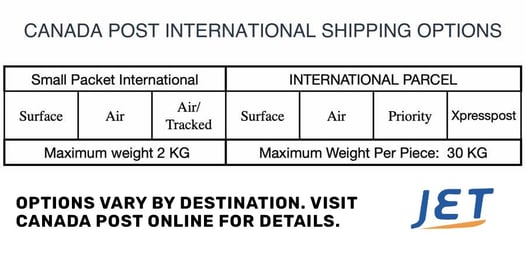
Delivery is the only physical contact most online sellers ever have with a customer. When a recognized EU domestic carrier such as DPD arrives at the door, the parcel reads as an established seller.
That difference shows up in reviews, in repeat rate, and in the support load you carry per order. Connecting Canadian sellers to known EU delivery brands is the point of the exercise, not a feature of it.
Diversification away from purely postal import is business continuity, not cost optimization. It is the way to "be European" in your offer but Canadian in your physical presence.
What changed in 2026
If you built your EU process before 2026, at least two of its assumptions are now wrong.
- The 150 euro exemption is gone and replaced with a flat 3 euro per item tariff under Regulation (EU) 2026/382. Low value parcels are no longer a category that escapes customs treatment. They are simply cheap parcels that get customs treatment.
- Product identifiers arrive on 1 November 2026 with voluntary filing available until then. See our guide to what changes on 1 November 2026 for the TARIC codes and how responsibility splits between platforms, manufacturers and declarants.
- The direction greater regulatory oversight continues to 2028 with the new Union Customs Code and the EU Customs Data Hub.
Your product data is becoming your clearance outcome. When complete, clearance is seamless, efficient and fast.
The five elements that decide clearance
Jet helps Canadian companies build durable import processes that get incorporated into the product listing itself, rather than bolted onto the shipping label. These are the five that matter, and the order is deliberate.
- Classification: classify the product, not the parcel.
The Harmonized System code is not always required in the same field on every declaration type, but the classification behind it always matters. It drives the duty rate, determines which CETA origin rule applies to your product, flags restrictions, and increasingly feeds the risk analytics scoring your consignment. Put the code on the product record, upstream of the order. Sellers who treat classification as a label field pay for it at the border. See HS codes for cross border online shipments.
- Value: fix the method, then apply it consistently.
The declared value is most often the transaction value, meaning what the customer paid. The judgement is in what you add to it. Whether transport, insurance and tax belong in the customs value depends on your terms of sale and the valuation method applied at destination. See declared value, CIF and valuation for international shipping.
- Restrictions: screen at listing, not at shipping.
Some items are restricted outright. Others are permitted subject to conditions, which is the harder category because it looks like a yes until it is not. Screening belongs upstream and at the point you list a product.
- Origin: CETA is a claim you must be able to prove.
Canada enjoys free trade agreements with most of the countries Jet services, including the EU under CETA. Goods that qualify as Canadian originating can be imported duty free, supported by a valid origin declaration. See CETA duty free import from Canada.
- VAT: decide who pays, and when.
All goods are subject to value added tax. The only real option is to collect it at checkout through IOSS registration. That is a customer experience decision at least as much as a tax one. See VAT collection for online orders shipped to Europe and our complete guide to EU VAT and IOSS.
This is the single most common misunderstanding among Canadian sellers shipping to the EU. CETA can remove the duty on qualifying goods. It does nothing to the VAT, which applies at the destination rate regardless of origin and is collected on effectively every commercial import.
What a failed clearance actually costs
The customs cost of a bad declaration is usually its smallest component. The real bill:
- A support contact, at your cost, from a customer who is already unhappy
- A refund, frequently, because the customer will not pay a charge they did not expect
- A return leg that can cost more than the original shipment
- A review that suppresses orders you never see
Which is why the five elements above are worth solving once, structurally, rather than parcel by parcel. Their value is not the duty they save. It is the distribution they narrow.
Frequently asked questions
Why does Canada to EU delivery cost about five times domestic?
Distance is only part of it. The parcel carries a linehaul, an export leg, a customs clearance event, VAT handling, an EU domestic last mile and a higher return rate. The clearance event and related administration is the expensive part.
What are my import route options?
Three. Postal: cheapest per parcel, least visibility, least control, and concentration risk if it stops. Express or integrator: fastest with clearance included, at a unit cost most DTC baskets cannot carry. Direct import consolidation: clears once in bulk at an EU entry point, then injects into an EU domestic network such as DPD, giving you one controlled clearance and lower unit costs as volumes grow.
Does CETA make my shipments duty free?
It can eliminate duty on goods that qualify as Canadian originating and are supported by a valid origin declaration. It does not eliminate VAT, which applies at the destination rate regardless of origin. Duty free is not tax free.
Do I need an HS code on every parcel?
Yes. It drives the duty rate, the CETA origin rule that applies, any restriction or licence, and increasingly how risk analytics score your consignment.
What value should I declare?
Usually the transaction value, meaning the price the customer paid. The judgement is in what you add: whether transport and insurance belong in the customs value depends on your terms of sale and the valuation method applied at destination. Declaring the sale price while ignoring the freight element is a common and correctable error.
What is IOSS and do I need it?
The Import One Stop Shop lets you collect VAT at checkout and remit through a single EU registration rather than having to deal with each country.
What changed for EU imports in 2026?
The 150 euro customs exemption was abolished and replaced with a flat 3 euro per item tariff under Regulation (EU) 2026/382. The same regulation makes product identifiers mandatory from 1 November 2026, with voluntary filing open since 1 July. The reform runs to July 2028 with the new Union Customs Code and the EU Customs Data Hub.
Why diversify away from postal?
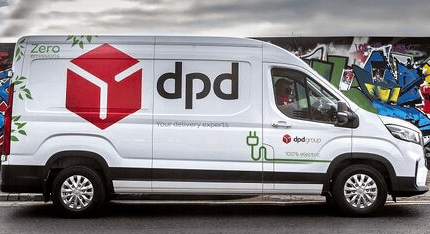
The post is a good option that we recommend for occassional e-commerce shippers. However, it has limitations regarding meeting the data requirements, payment of duty, and VAT.
Does the local carrier brand at the door matter?
Measurably. Identifying a European recognized domestic carrier at checkout established greater brand trust and more click throughs.
What does a failed clearance cost?
Pretty self evident. Build a system to systematically avoid clearance delays.
Building a durable EU import process
Jet Worldwide has connected Canadian sellers to international markets for over 35 years, with direct import solutions into France and the EU. If you are working out which route fits your basket, or whether your product data is ready for 1 November, we can help.

The information in all Jet Worldwide online content, including this post, is for general information only. It does not constitute legal, customs or tax advice, and regulatory requirements change. Confirm current obligations with a licensed professional or the relevant authority before acting.