As nationalist rhetoric continues, so does the march towards global free trade..
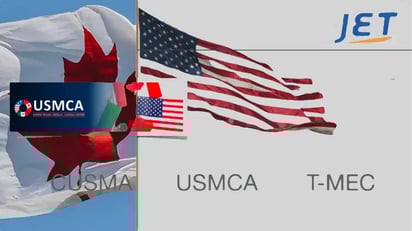
The overwhelming approval of the "new NAFTA"/ USMCA by a divided US congress is a reminder of how important free trade is to the global economy.

As nationalist rhetoric continues, so does the march towards global free trade..
The overwhelming approval of the "new NAFTA"/ USMCA by a divided US congress is a reminder of how important free trade is to the global economy.
Maximize your global reach with the Comprehensive and Progressive Agreement for Trans-Pacific Partnership (CPTPP). Reach 12 member countries and more than 580 million consumers with 0 percent duty on qualifying Canadian exports.
AI logistics assistant (copy and paste)
Use Gemini or ChatGPT to sanity-check your product eligibility, then bring the result to our experts:
"I am shipping [insert product] from Canada to [insert country, for example Japan]. Using Jet Worldwide's CPTPP guide, help me confirm the product-specific rule of origin (commonly a 40 percent regional value content test), identify the likely HS code, and draft a Certification of Origin statement for my commercial invoice."
Refining your trade data with AI helps our experts provide faster, more accurate routing.
The CPTPP gives Canadian companies access to a region representing roughly 15 percent of the global economy. Member countries include large mature economies like Japan, Australia, and the United Kingdom, alongside high-growth markets like Vietnam and Malaysia.
Jet Worldwide desk view The step most exporters underestimate is proving origin, not finding the tariff line. [[PLACEHOLDER: insert a proprietary data point, for example: X percent of the CPTPP-lane shipments we reviewed in the first half of 2026 needed a rule-of-origin correction before the Certification of Origin would hold up]]. Getting the product-specific rule and the invoice statement right the first time is what turns a 0 percent tariff on paper into a 0 percent duty at the border.
To qualify for duty-free status, your goods must undergo sufficient production within the CPTPP zone. Qualification is governed by product-specific rules of origin (CPTPP Annex 3-D), which a good meets through a tariff-classification change, a regional value content (RVC) threshold, or a combination. The table below is illustrative — the binding rule always depends on your product's HS classification.
| Rule category | Typical requirement (illustrative) |
|---|---|
| General (RVC) | Commonly at least 40 percent Regional Value Content under the transaction-value method (a lower threshold can apply under the net-cost method). |
| Textiles and apparel | A "yarn forward" rule: yarns and fabrics must generally be produced within the CPTPP zone. |
| Automotive | A higher RVC threshold, commonly cited near 45 percent, under the applicable product-specific rule. |
A real advantage of the CPTPP is that it was built with small businesses in mind, which gives Canadian-made goods a competitive edge in foreign markets.
Under CPTPP you do not need a government-issued form. A Certification of Origin statement can be added to any commercial document. Read more about the Certificate of Origin. Here is sample text you can adapt:
A compliant Certification of Origin generally needs:
Choosing the right mode is central to your landed-cost strategy. Consignments under 100 kg are often more cost-effective by air cargo than by ocean freight, once lower port surcharges are factored in.
Duty may be 0 percent under CPTPP, but destination import taxes still apply and are collected at the border. Standard 2026 rates in selected member countries:
Get a custom consultation for your specific trade route.
Get My Custom QuoteCPTPP rules of origin are product-specific. A common threshold is 40 percent Regional Value Content under the transaction-value method, but the binding rule depends on the product's HS classification, and some goods qualify by a tariff-shift rule instead.
No. Under CPTPP there is no government-issued form. A Certification of Origin statement can be added to any commercial document, such as the commercial invoice, provided it contains the required data elements.
Twelve. The original eleven members plus the United Kingdom, whose accession entered into force on 15 December 2024. Neither the United States nor China is a member.
No. CPTPP can reduce the customs duty to 0 percent on qualifying goods, but destination import taxes such as VAT, GST, or consumption tax still apply and are collected at the border.

The Comprehensive Economic and Trade Agreement (CETA) remains Canada’s most powerful tool for EU market expansion. In 2026, the focus has shifted from simple "tariff removal" to "digital compliance." Canadian companies now enjoy virtually duty-free access, but the burden of proof regarding Rules of Origin has become more technical.
American companies are increasingly looking North to Canada with a huge opportunity created online purchases. The "new NAFTA" USMCA/ CUSMA contains the important provisions to facilitate e-commerce orders shipped from the US to Canada duty free.
Canada and Hungary enjoy a growing trade relationship bolstered by the Canada-European Union Comprehensive Economic and Trade Agreement (CETA). With two-way merchandise trade nearing 1 billion CAD annually, Canadian businesses have a massive opportunity to sell directly to Hungary's robust e-commerce market of over 6 million online shoppers.
The Universal Post Union - an UN agency that governs the rates and rules between the world's post offices - is now discussing expanding its role to include private carriers. The UPU plays a crucial for facilitating cross border e-commerce postal parcels and has ambitions to facilitate the movement of all international parcels.
Although Canada's economy is fundamentally driven by commodities, economic growth is increasingly dependent upon the million plus small businesses with fewer than 100 employees. Jet Worldwide - being one of those small companies with specialized expertise - is uniquely qualified to help Canadian small businesses expand globally.
Pittsburgh and Montreal, Quebec share a strong economic connection. This economic connection includes the The Elysis joint venture project between Alcoa, Rio Tinto, Apple and the governments of Quebec and Canada. Jet Worldwide provides economy express shipping options to Canada from Pennsylvania.
Consumer spending continues to be strong with global consumers cross border e-commerce purchases are playing an increasingly important role for continued economic growth from Canada.